
Experimenting with satellite connectivity: a long-cherished wish that has finally become reality. We recently installed a Starlink dish at our facility, opening the door to new research and exploration. It allows us to investigate application performance, reliability and data routing.
At Do IoT Fieldlab, the satellite connectivity is now primarily used as a research object itself, allowing scientists and companies to compare satellite networks performance to terrestrial connectivity performance. We specifically opted for Starlink because these satellites operate closer to earth, in the Low Earth Orbit, which significantly reduces latency. In addition, the satellites communicate through laser connectivity, meaning a satellite in space can directly connect to a dish on the ground. This ensures reliable connectivity and far less reliance on ground stations. Traditional satellites still fully depend on those ground stations, makes it more difficult to guarantee global connectivity.
Remote areas
Global connectivity with communication technologies such as 5G is promising, but currently not always available. While most of Europe enjoys a strong fibre infrastructure, some regions still face challenges in accessing reliable connectivity due to geography and cost. Think of remote or mountainous areas, places where cables or cell towers aren’t practical. This is where satellite networks can bridge the gap. These functional characteristics makes the addition of satellite connectivity at Do IoT Fieldlab self-evident.
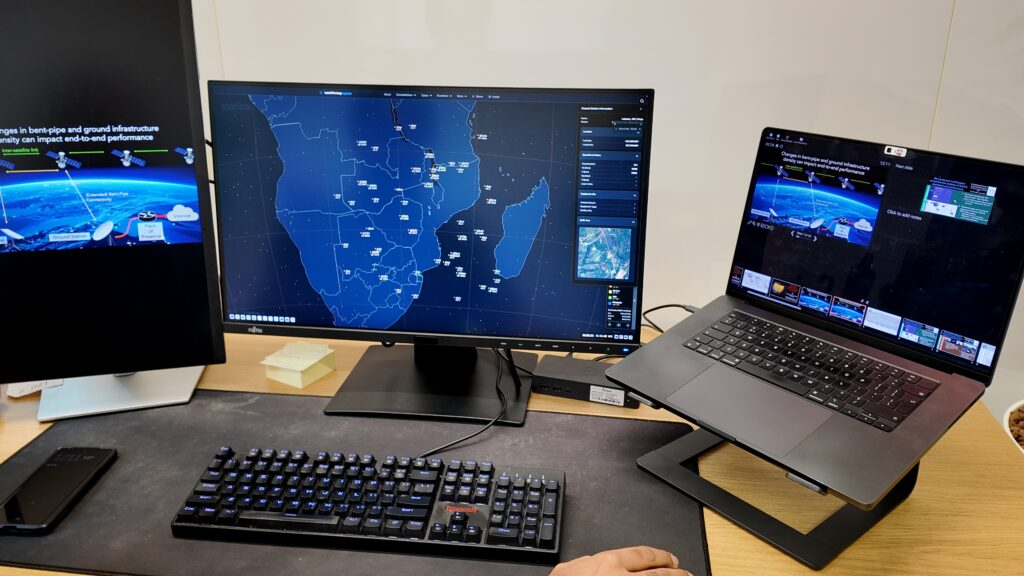
The installation at Do IoT Fieldlab is part of the international LeoScope testbed. This open, collaborative platform allows researchers worldwide to run experiments across different Starlink network point. The network provides valuable insights into how satellites behave in different regions, what limitations exist, and how they might be overcome.
According to Dr. Nitinder Mohan, expert in Networked Systems and Internet Measurements, this is only the beginning:
“Satellite internet has the potential to radically transform global connectivity. But there are still many open questions about performance, governance, and integration with existing networks, which we can eventually look into with collaborating companies. That’s exactly what we’re exploring here with the new installation.”

Reliability is crucial
One challenge that we are researching, is the routing of a satellite. Dutch users, for example, are now often routed via German ground stations, which can affect both performance and compliance with national regulations. Exploring this is crucial for the use of applications such as drones and robotics, where reliability and low latency are essential. Adding satellite connectivity to our portfolio marks an important step in bridging communication on land, water, and space creating opportunities for new innovations and practical use cases in the years to come. It will help us assist researchers and companies to deploy their experiments with a combination of wireless technologies.