Projects
Do IoT Fieldlab is involved in projects with a highly innovative character. In these projects 5G-enabled IoT is being researched and tested within themes such as mobility, logistics, smart manufacturing, safety, health and smart cities.

The global development of 6G is in full swing. This next-generation mobile technology will reach the market in 2030. With the Future Network Services (FNS) programme, the Netherlands is investing in this development. Do IoT Fieldlab has a key role as a partner in this programme. The development of digital technologies is moving fast and many countries and companies worldwide are investing heavily in these areas. The Netherlands is a forerunner in the development of communication technology and intends to take a leading position in the development of 6G as well.

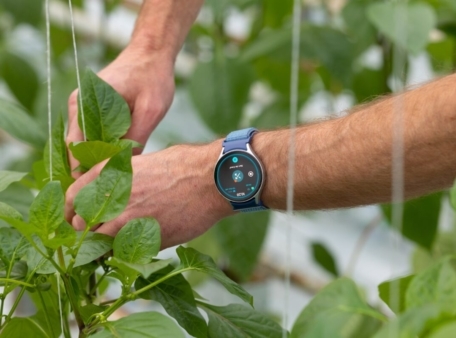
For many organisations in horticulture, gaining valuable insights into work processes is fundamental to continuous improvement and meeting industry standards. With this goal in mind, Opus Solutions B.V. has developed the OPUS watch, a smart watch specifically for this sector. However, the connectivity required to track activities isn’t always guaranteed in environments dominated by extensive glass and metal structures, such as greenhouses.

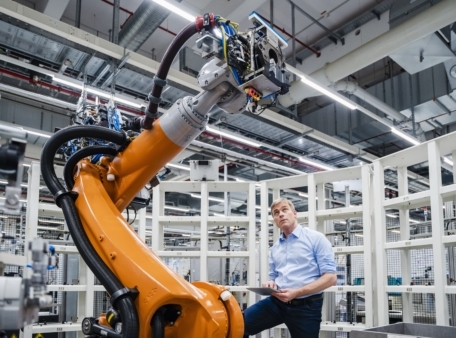
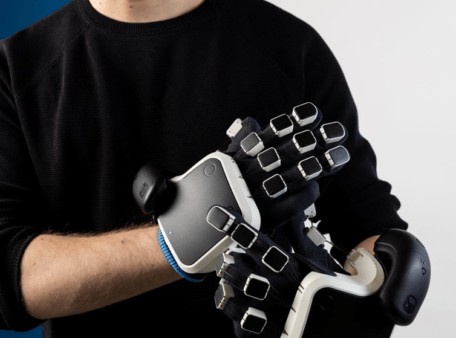
Teaching a robot by demonstrating what it should do. Currently, this is quite complicated. In the future, it will bring new opportunities for automation. Engineers from RoboHouse, TNO, TU Delft and Do IoT Fieldlab are analysing different applications, to evolve the remote robot teaching standards.

The Dutch greenhouse horticulture sector is facing a pressing challenge: while the workload continues to increase, skilled labour is increasingly scarce. There is no shortage of tasks, only of hands to do them. How can we ensure that productivity and sustainability remain safeguarded? The Telegreen project may offer an answer: a collaboration between academia and companies developing an innovative humanoid arm that will support employees and secure the future of the sector.

Reliable coverage is not only important on land, but also at sea. Certain parts of the Dutch coastal waters are not covered. Therefore, startup Drocean aims to create a complete and detailed 5G/4G coverage map of the North Sea to foster within the Dutch maritime sector.

Applying 5G mobile communications technology in a closed environment such as a greenhouse is relatively new. Numerous studies have examined the effects of electromagnetic fields on flora and fauna. Yet, the novel frequencies used by 5G systems are higher than those used by 2G-4G networks. They potentially have a greater impact on smaller organisms, such as plants and pollinators. The aim of this project is therefore to determine whether a 5G network has any effect on the growth of plants or on the behavior of pollinators in a greenhouse.

How can 5G help hearing-impaired people have a much clearer hearing of speech in a noisy environment? Dutch company Absolute Audio Labs is experimenting with integrating 5G technology into a hearing aid. Their aim is to significantly improve the audibility of a conversation, even when someone is whispering.

Delft based startup PATS is developing insect monitoring and bio-inspired control systems for greenhouse horticulture. Pest insects in a greenhouse can disturb plant growth or even be a threat to crop yields. Yet, in a healthy ecosystem, some insects can specifically be helpful. Therefore, distinguishing one from the other is preferable, to deploy the appropriate control measure. The aim of this project is to investigate how 5G can contribute to establish fast, reliable connections and improvement in data management.

Technological progress in recent years does not yet solve the labour shortage in greenhouse farming. The introduction of 5G is expected to accelerate innovation for sustainable food supply while stimulating more efficient cultivation. For instance, plant health is currently still mainly assessed by the human eye. Delft startup Plense Technologies wants to improve cultivation quality with their ultrasound sensors.