From 2 November, national meteorological services are replacing traditional provincial boundaries. This allows weather warnings to be more precise and localised, showing more clearly which areas are likely to be affected. Let’s take this a step further.
Researchers from TU Delft and Technische Universiteit Eindhoven are exploring how 5G networks could do more than “simply” connect us. Their signals could potentially also help predict rainfall down to street level!
With the help of Do IoT Fieldlab’s 5G installation at The Green Village, the research team is currently collecting and analysing data to better understand these signal patterns. The project is still at an early research stage and could become a valuable addition to existing rainfall estimation techniques based on weather radar and rain gauges, potentially contributing to more accurate short-term weather forecasts.
Transmitters and receivers developed at TU Eindhoven’s Centre for Wireless Technology have now been installed to study how signals travel between buildings and how obstacles and human activity affect them. The next step? To distinguish these effects from changes in signal patterns caused by rainfall.
The arrival of 6G will bring an even greater number of connected devices. But there’s a challenge we can’t ignore: how do we scale the IoT without sending energy consumption through the roof?
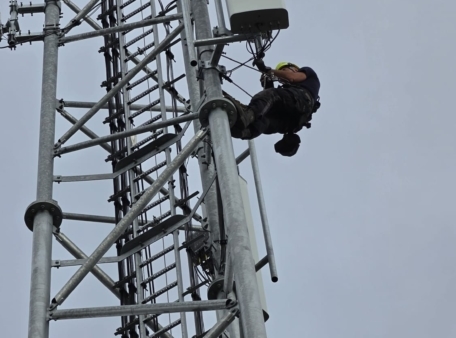
Making the electricity grid smarter in real time, while keeping critical communications running during a blackout? Together with Future Network Services, TNO, TU Delft, and Nokia, we’re testing exactly that with the new 600 MHz antenna.
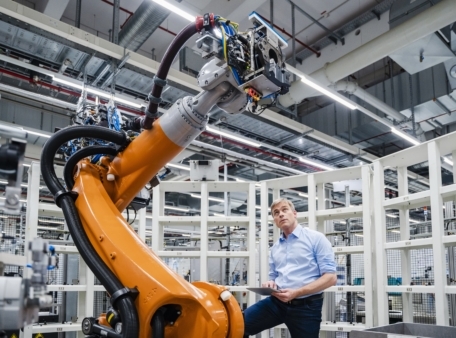
Recently, Do IoT Fieldlab installed a Beyond 5G network at SAM XL, making it one of the test facilities within the National 6G Testbed. Since then, new experiments have become possible. Experiments that simply weren’t possible before.
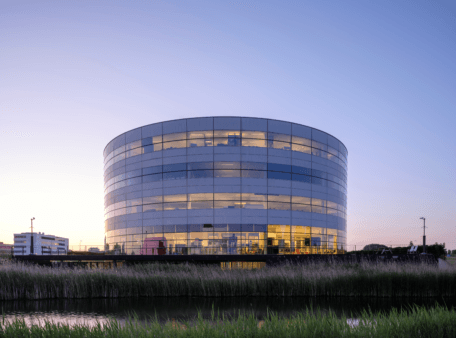
Solutions for challenges such as grid congestion? They might be closer than you’d expect. Imagine a building that knows what is happening indoors and adjusts its energy use accordingly. By combining insights into occupancy, energy consumption, and indoor climate, smart buildings can reduce peak loads and use energy more efficiently. This makes buildings not only more sustainable, but also safer and more efficient.