Many gigabytes
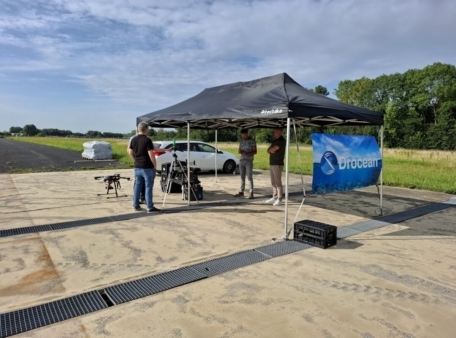
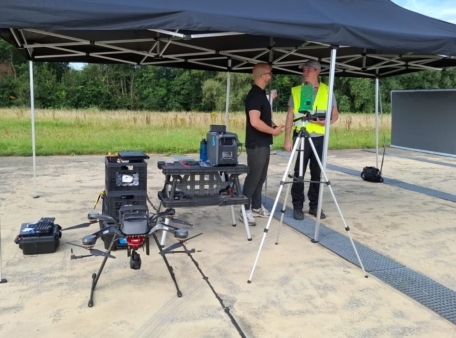
Although 5G is not yet widely used, a few experimental facilities and production companies are utilizing the 26-gigahertz frequency band with a trial permit. “We have measured what the actual exposure is and what the typical or maximum exposure is that people and workers might face,” explains John. “The EU will naturally set a limit value that is much lower than the actual maximum exposure. We are trying to determine what that limit value should be. We notice that exposure to electromagnetic fields increases slightly every year, because more and more applications use wireless connections. If you download or stream movies on a train, that puts a heavy strain on the network. The use of data communication is increasing on a small and large scale; it all adds up.” “The major telecom companies will configure their network based on coverage, not electromagnetic field strength,” adds Marco. “By joining forces in Europe, we are accelerating the development of regulations and safety measures. Of course, we are not going to reinvent the wheel. A great deal of knowledge has already been gathered globally, and as scientists, we know where the gaps lie. At the local level, TU Delft and The Hague University of Applied Sciences combine their expertise and complement it: my team devises the concepts; after the laboratory experiments, we test the sensors in a realistic environment, the field lab, and John and his team own the use case. We then make adjustments based on their input regarding the hardware, which is crucial for achieving usable and tangible results. We are so far ahead in technology that some things have not yet been invented. Which is, of course, a huge driving force for everyone involved.”
“That is indeed correct,” confirms John. “At the same time, we know from experience that experiments always turn out differently than we had planned or anticipated. So you get incomplete measurements… and you have to repeat them again and again. That causes a lot of frustration, and you have to be able to deal with that. It is a lot of work, but ultimately very worthwhile once we have the data and can start analyzing it. For this, we draw on our own experience with 4G, acquired knowledge, and the international knowledge exchange with our project partners.”
The NextGEM project runs until 2027. However, according to John, that will not quite mean the end of all 5G research: “I think there is still a lot of work to be done, and I am quite certain that the National Institute for Public Health and the Environment will continue to collect information for at least the next ten years. In any case, health effects are being permanently monitored in society.”