Always a field test
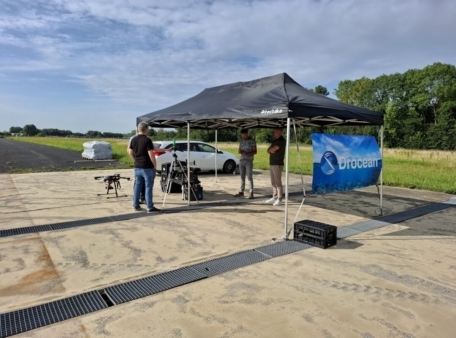
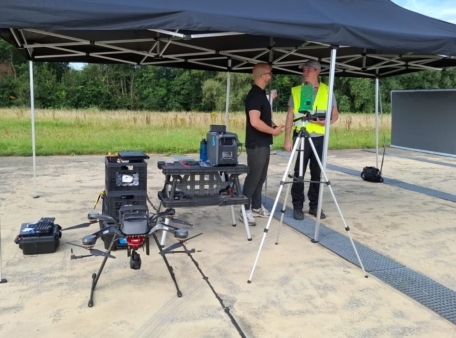
“We started by setting up the network. Soon we discovered we already had excellent coverage with just two stations. We expected to need at least double that. This was a huge eye-opener! That taught us that you really should always perform a practical test. Theoretical models are very useful and help us map things out, but with new technology we actually learn in practice what is truly needed,” Bas states. In any case, he found the factory environment impressive. “We walked all around the factory. Engineers specifically visit areas behind the scenes, where there is machinery that controls a process. What an environment! Very ingenious how such a pipe system is designed. There has to be perfect network coverage in litterally every corner. Especially in the event of an outage. At that point a reliable and fast connection is essential.” The 5G connection met all Nobian’s needs. MCS also installed a 5G router, which could generate a Wi-Fi signal. This ensured that the combination of old technology on a new network was very useful: the team got the required application running and stable.
With creativity and inventiveness, MCS and Nobian continued working on the next step: what if a mechanic could remotely watch along via VR (Virtual Reality)? This could come in handy in case of a failure with potential danger and where time is short. Bas: “We have also been testing this. One technician is on site and another technician can watch remotely, so anywhere in the world, in real time. The two of them go through scenarios and can fix a malfunction. No fumbling with video calls where you can’t clearly distinguish the details and only have 1 hand free. With the 5G and VR combination, you can stay focused and have both hands available. Furthermore, VR can also be beneficial in training staff. For example, a trainee can “step in,” watch and learn from a rare breakdown. For large industry, this is very valuable. Especially now that we know that the required investment for a 5G network is very modest. You can build an excellent network without cramming equipment all over the place. Although of course customisation remains key: each environment and each factory is different. We still take the manufacturer’s standard values as a starting point. Then, we examine on site what the optimal network setup should be.”