TNO research scientist Relja Djapic looks back on this interesting use-case, that could drastically change the liquid cargo sampling process in the future. “Together with a student group from Rotterdam University of Applied Sciences, Rotterdam Mainport Institute we decided to focus on this maritime and logistics use-case. Before a tanker comes to a port, a check is needed to verify its content. Is it the same as ordered and paid for? Didn’t it get contaminated during transport? At present a certified person – a surveyor is transported to the ship, climbs on board, collects a sample and brings it back to the lab. We were curious if a drone could be sent offshore, beyond visual line of sight in order to complete the sampling process. We were keen to prove that 5G could be used as enabling technology in this use-case.”
Regulations
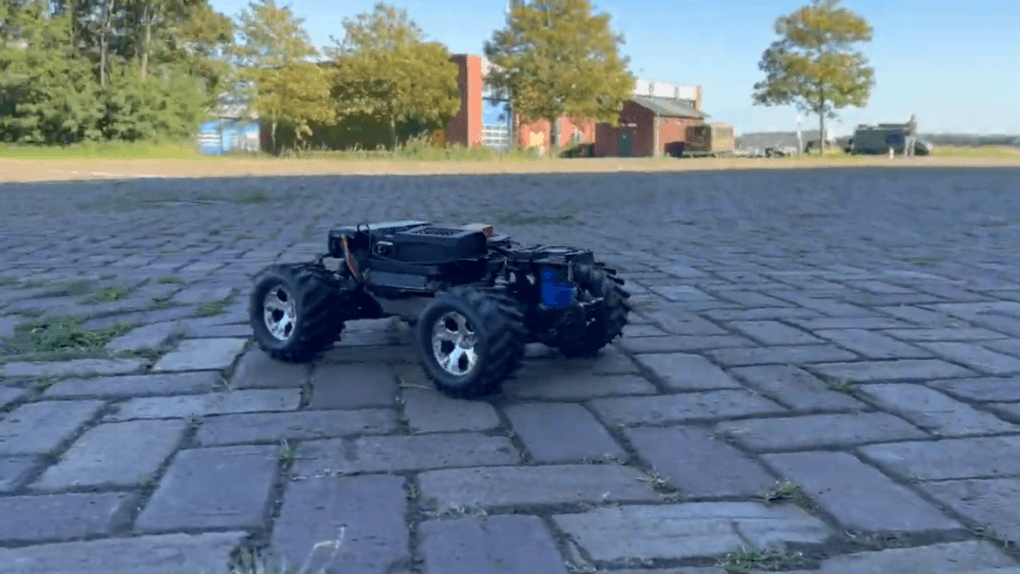
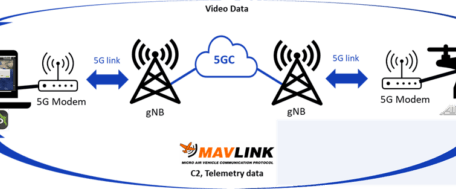
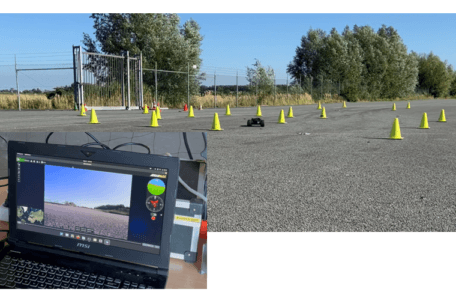
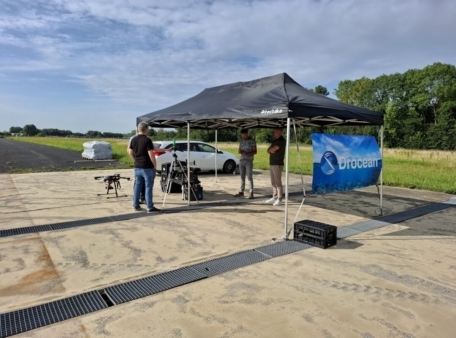
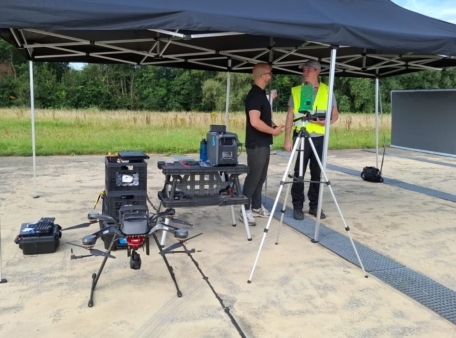
The team had a discussion with numerous stakeholders to collect precious insights in the selected use-case e.g. the port of Rotterdam, Shell, liquid storage companies as well as drone SMEs. One of the major issues to conduct field trials with drones is that, at present, the Dutch legislation for beyond visual line of sight (BVLOS) drone operations are not yet in place. This means that the drone pilot needs to have visual contact with the drone at all times. Relja: “As alternative to performing BVLOS trials with drones we came up with the idea to initially verify the concept through trials with a remote controlled model car. The car is equipped with a camera and a 5G modem. A video of the car’s surroundings is transmitted through the 5G network to the pilot on a remote location. Based on the received video the pilot steers the car and even performs a slalom between traffic cones. The first round of field trials were conducted in the Unmanned Valley where an experimental 5G network is deployed. During the trial the model car was able to seamlessly switch from one serving 5G base station to another one that was providing better quality of service in a given situation. 5G network throughput was sufficient to support video transfer from the car to the pilot and the measured latency was small enough to enable remote precise remote control through the 5G network. This is an important proof that the concept of 5G based BVLOS command and control of unmanned vehicles is feasible. The trials are registered in a video, so you can see how the testing with the model car took place.”